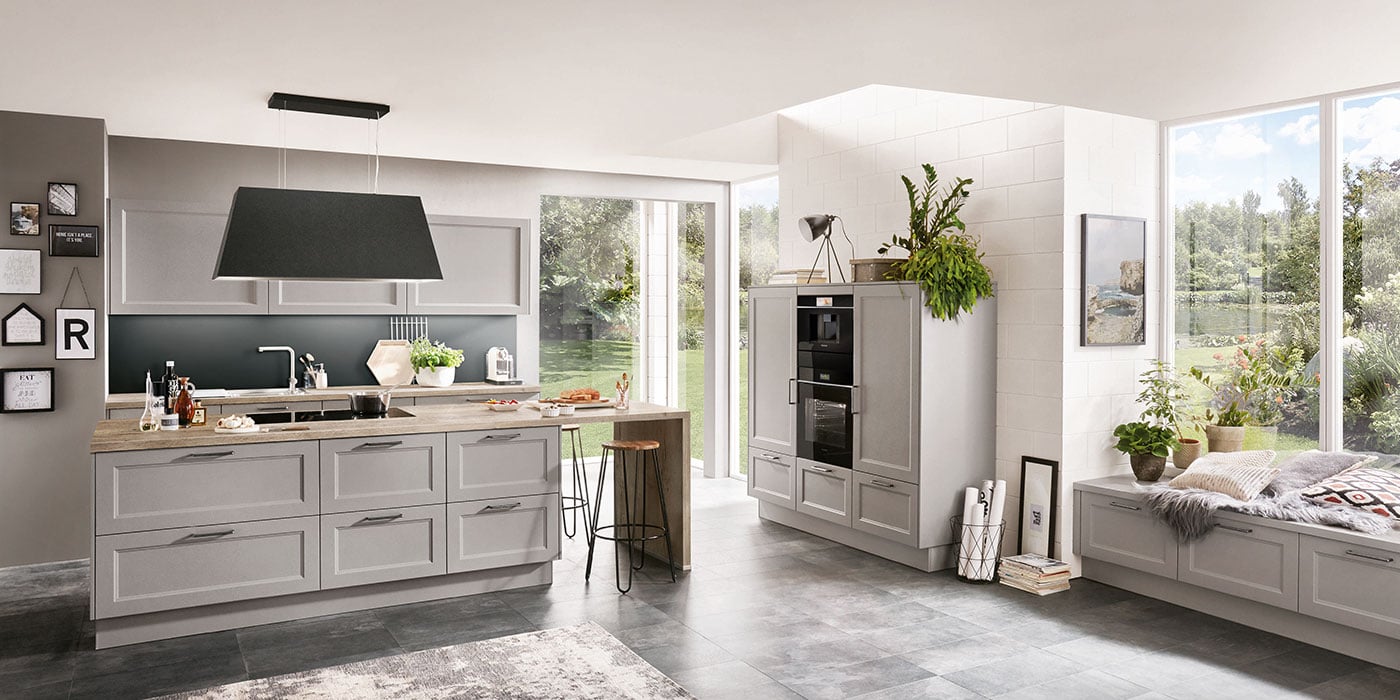
If you’ve ever looked into kitchen design, you’ve probably come across the idea of the “working triangle”. It’s one of the most widely discussed principles in planning – the theory being that the sink, cooker and fridge should form a triangle, allowing you to move between them quickly and easily.
But while the triangle has been a useful guide for decades, it isn’t a strict rule. Every home is different, and so is every household’s routine. A well-designed kitchen isn’t one that follows a formula, but one that makes everyday life simpler for the people who use it.
The Origins of the Triangle
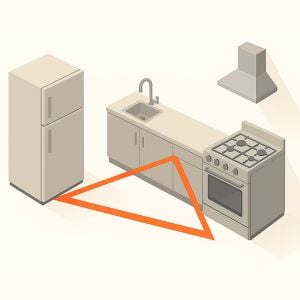
The kitchen work triangle was first developed in the early 20th century as homes modernised, and appliances became more standardised. The idea was simple: by placing the sink, fridge and cooker at three points of a triangle, with unobstructed pathways between them, tasks such as cooking, cleaning and storing food became more efficient.
It’s still a helpful starting point today. If you’re designing a kitchen from scratch, it’s worth asking: how easy will it be to move between those three key zones? If the answer is “very”, you’re probably on the right track.
When the Triangle Doesn’t Fit
Of course, not every room makes a perfect triangle possible. Quirky cottages, narrow galley kitchens, or large open-plan layouts all present challenges. In these cases, the triangle should be seen as inspiration rather than instruction.
Think about how you actually use your kitchen. For example:
- If you find it frustrating to carry hot trays across the room without a worktop nearby, prioritise having counter space next to the oven.
- If making tea or coffee is a more frequent part of your day than cooking, then the distance to the fridge for milk might not matter as much as having a kettle or coffee machine close to where you sit.
- If you have young children, you might want to place the fridge away from the cooking area so they can grab snacks without getting underfoot.
In short: the triangle is a guide, but lifestyle should take priority.
Expanding Beyond the Triangle
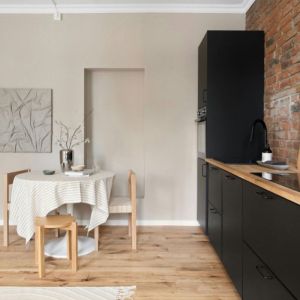
Modern kitchens often do more than just provide a place to cook. Open-plan living has blurred the lines between kitchen, dining and social spaces, meaning you may need to think about more than just three points of activity.
Here are a few additional “zones” worth considering:
- Coffee or drinks station – A dedicated nook for your morning routine, complete with a small fridge or wine cooler for milk and chilled drinks. This avoids interrupting whoever’s cooking.
- Breakfast bar or island seating – A social hub where family and friends can gather. Including cutlery drawers nearby saves trips back and forth when someone forgets a spoon.
- Toaster or small appliances – If you use them daily, give them permanent space on the counter. If not, think about storing them behind a tambour dresser or in an appliance larder, ready to appear only when needed.
- Baking zone – For keen bakers, a stretch of clear worktop near the oven and storage for flour, mixers and trays can make a big difference.
- Homework or home office corner – In larger open-plan spaces, it can be helpful to include a dedicated area for laptops and papers, so they don’t creep onto the cooking surfaces.
The triangle doesn’t account for these spaces – but your design should.
Adapting to Your Household
The most effective kitchen layouts are shaped by who uses them and how. A young professional couple will have different needs from a family with small children, and those needs will shift again in later years.
Some things to think about include:
- Families with young children – Consider low-level storage for cups and plates so children can help themselves safely, or a fridge-freezer with accessible compartments for snacks. Keep sharp knives and heavy pans higher up or in child-locked drawers.
- Busy households – If more than one person cooks at once, creating two prep zones with their own chopping boards, sinks or appliances can prevent bottlenecks.
- Entertaining – If you love hosting, a bar area or serving zone away from the main cooking space allows guests to help themselves without getting in the way.
- Older homeowners – Think about reducing bending and stretching by including pull-out shelves in base units, raising ovens to eye level, and choosing drawers over deep cupboards.
Design is personal – and should make everyday routines easier, not harder.
Worktops and Landing Zones
One often-overlooked part of design is the “landing zone” – the area immediately next to a key appliance where you can set things down. For example:
- Countertop space on both sides of the hob is ideal for holding ingredients, pans or utensils.
- A surface next to the fridge helps when you’re unloading shopping or grabbing several items at once.
- Space beside the oven avoids the awkward dance of carrying hot trays across the room to find a place to rest them.
These landing zones can be just as important as the triangle itself.
Beyond appliances, consider the flow of movement through the kitchen. Are there areas that risk becoming pinch points? Will someone sitting at the island block the path to the fridge? Does the dishwasher door, when open, cut off access to a key cupboard?
A good layout feels natural to move around in, without constant sidestepping or backtracking. Try sketching out your usual routines on paper to see where potential problems might occur.
Storage with Intention
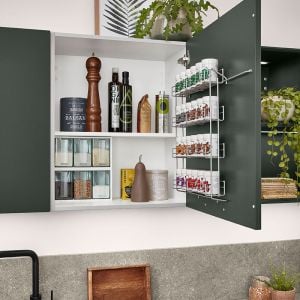
Storage can make or break a kitchen’s usability. Plan where items will live, not just how many cupboards you’ll have. For instance:
- Place pans and utensils near the hob for easy access.
- Store mugs near the kettle or coffee machine.
- Keep plates and cutlery close to the dishwasher to speed up unloading.
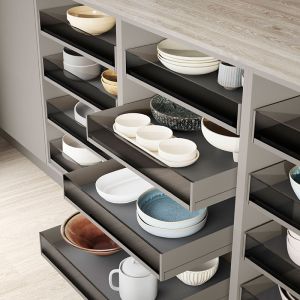
- Use deep drawers for heavy pans rather than low cupboards that require bending.
Thoughtful storage design reduces unnecessary steps and helps keep the kitchen tidy.
When Rules Can Be Broken
Sometimes, breaking the rules works best. For example:
- In a galley kitchen, placing the sink and hob on the same run can save space and make the workflow smoother.
- In very large kitchens, creating two smaller triangles (for example, one for cooking and one for drinks or baking) can be more efficient than stretching a single big one.
- In open-plan spaces, it might make more sense for the fridge to sit at the edge of the kitchen, so it’s accessible without guests crossing the cooking zone.
Rules are useful, but flexibility is what makes a kitchen truly yours.
Final Thoughts
The kitchen triangle has guided designers for almost a century, and for good reason – it helps create a logical, efficient space. But it’s not the only way to design a kitchen, and it’s certainly not the whole story.
What matters most is how you and your household use the space every day. Whether it’s carving out a coffee station, keeping cutlery near the breakfast bar, or designing with children or pets in mind, the details should reflect your routines.
So while the triangle remains a helpful reference, don’t be discouraged if your room’s shape, size or quirks don’t allow for it perfectly. With thoughtful planning, you can create a kitchen that’s not only practical but a genuine pleasure to use – a space designed for your life, not just the rulebook.